Taruni already had the category logic and operational maturity for a controlled rollout.
The page should make this explicit so the proof feels honest, not inflated.
Taruni is a women’s ethnicwear brand where cut-size and alteration workflows are operationally feasible. That made it a strong candidate for a controlled CutSizeGenie rollout.
The page should make this explicit so the proof feels honest, not inflated.
Replace this with one metrics-led visual from Taruni: before and after size availability, influenced revenue, or rollout sequence.
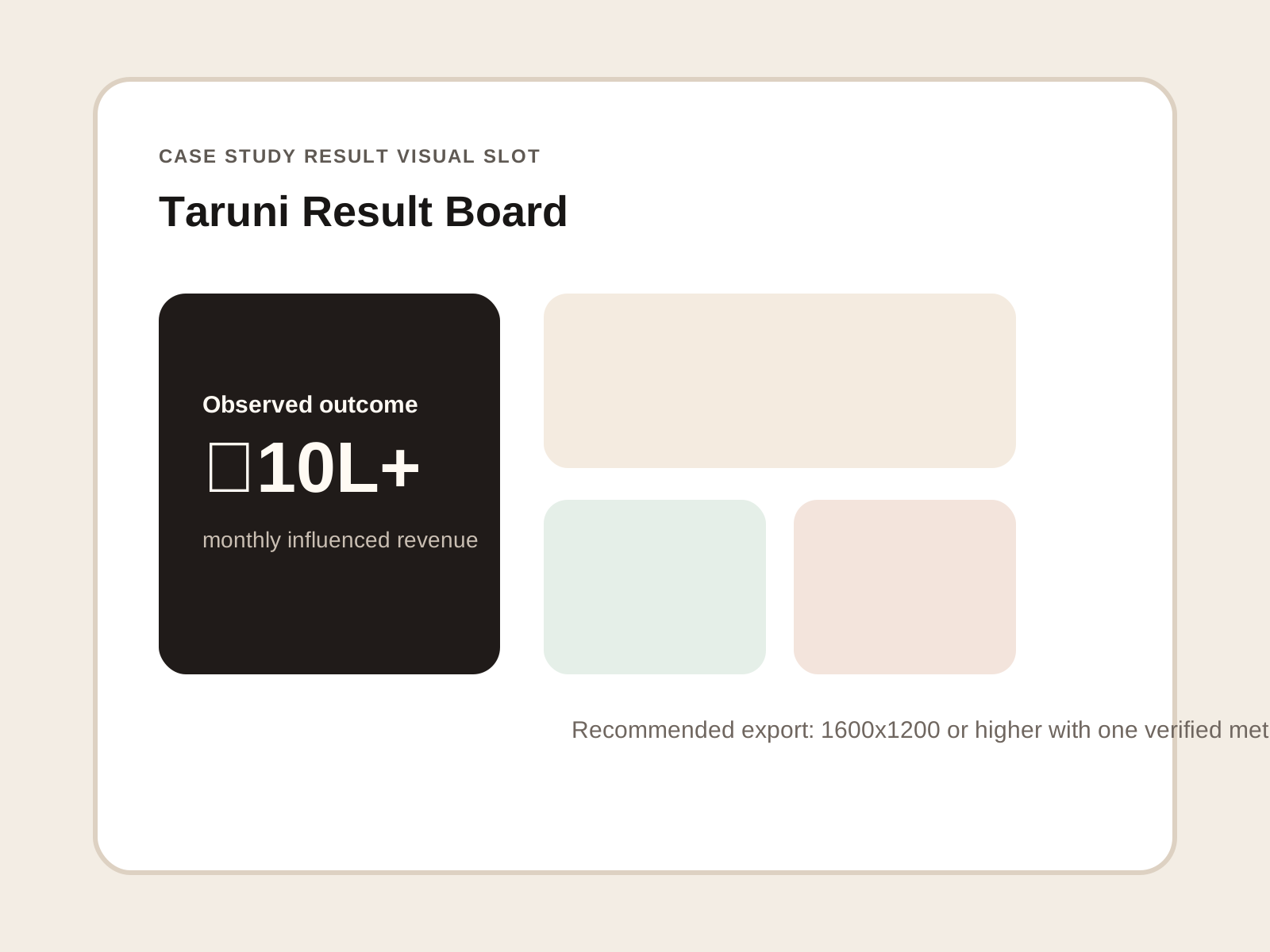
The case study should use one clean evidence asset with one strong number, one operational context note, and one explanation of why this category was a fit.
Like many apparel brands, Taruni often had inventory in adjacent sizes while shoppers wanted sizes that showed as unavailable. That meant product-page traffic did not fully monetize, even when the assortment still had usable inventory depth elsewhere.
Taruni’s category made it practical to map source sizes to target sizes where alteration or cut-size handling was already part of the real-world workflow.
This was not simply a stock display issue. The business case depended on operational feasibility, safety rules, and clean order visibility.
Only use categories where size substitution made operational sense.
Protect source stock before it could be overcommitted.
Give operations teams the context needed for downstream processing.
Observed incremental sales influenced by recovered size availability reached ₹10L+ per month.
More product pages maintained a stronger visible size run instead of losing the shopper immediately.
Paid sessions were less likely to die on a missing-size state, improving efficiency directionally.
Teams had a clearer process for handling orders influenced by recovered size demand.
Taruni is a strong example because its product category and operations model make this workflow feasible. Results vary by assortment, process, and rollout quality.